Physical Address
304 North Cardinal St.
Dorchester Center, MA 02124
Physical Address
304 North Cardinal St.
Dorchester Center, MA 02124
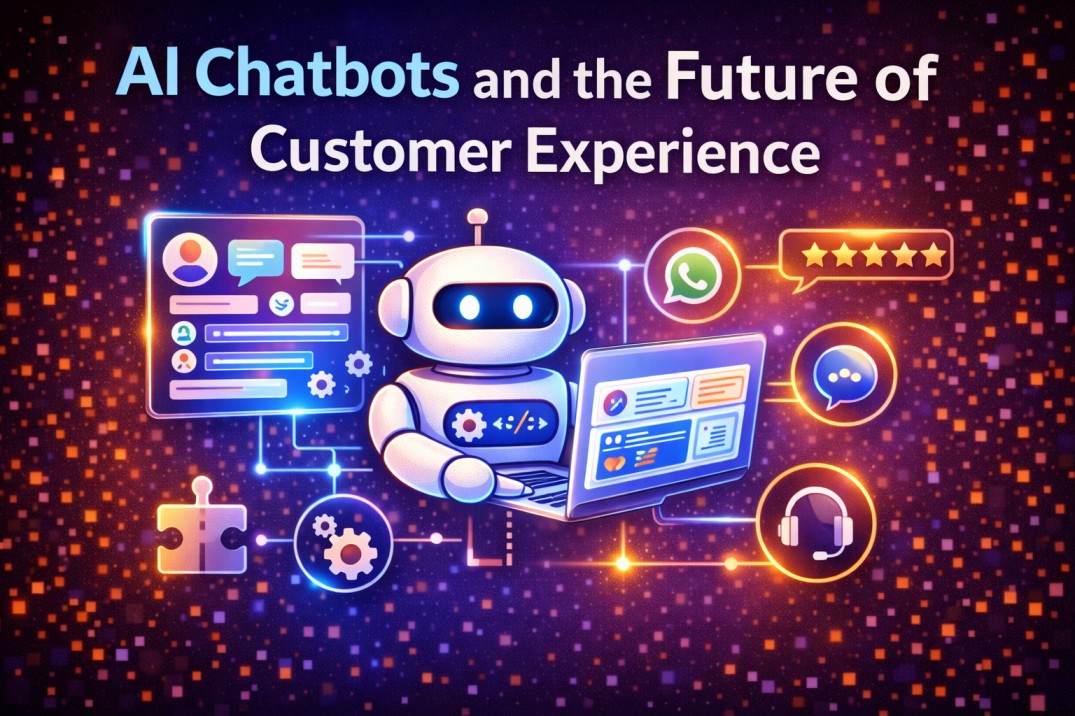
Customer experience is no longer a “support department issue.” It has become the primary battlefield for business growth.
In 2026, two companies can sell the same product at the same price, but the one that responds faster, understands customers better, and reduces friction in decision-making will win almost every time.
That is why AI chatbots have moved from being simple website widgets to becoming core business infrastructure powering customer engagement, lead generation, sales conversion, and retention.
This shift is being driven by modern AI systems such as Nexus Botix, which transform static knowledge into intelligent, conversational experiences that operate 24/7.
To understand where we are today, it is important to understand where we started.
These early systems followed rigid decision trees. They worked like flowcharts:
They were predictable but extremely limited. Any unexpected question broke the experience.
With natural language processing becoming mainstream, chatbots began to understand intent instead of keywords.
They could:
However, they still lacked deep reasoning and business context.
We are now in the AI agent era. Chatbots are no longer just responders—they are decision-support systems and task executors.
Modern platforms like Nexus Botix allow businesses to train chatbots on internal knowledge, workflows, and customer behavior, enabling them to:
This is not an upgrade. It is a category shift.
Customer experience (CX) used to be considered a “soft metric.” Today, it directly impacts revenue.
Research from McKinsey & Company shows that companies leading in customer experience consistently outperform competitors in revenue growth and customer retention.
Why? Because modern customers expect:
When these expectations are not met, users leave immediately.
AI chatbots solve this by becoming the first point of contact that never sleeps, never delays, and never forgets context.
Engagement is no longer about volume. It is about quality of interaction per session.
Modern AI chatbots improve engagement in four major ways:
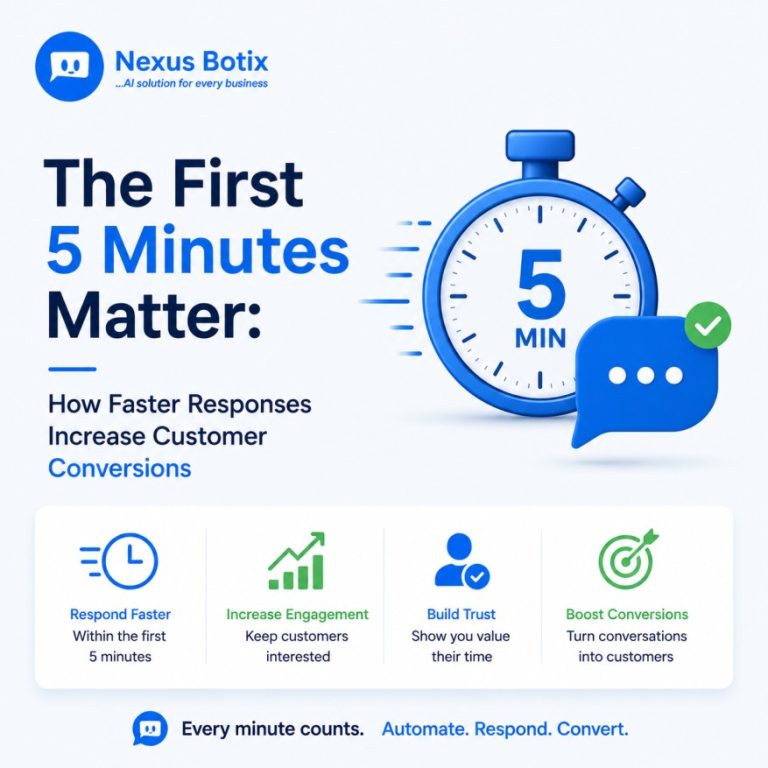
Every second of delay reduces conversion probability. AI chatbots respond instantly, keeping users engaged while interest is still high.
Unlike static bots, AI systems understand user intent over multiple messages. This creates a natural, human-like flow.
Based on user inputs, chatbots adjust their responses dynamically. Two users asking the same question can receive completely different guidance.
Instead of simply answering questions, chatbots now guide users toward outcomes:
With Nexus Botix, businesses can design these experiences using their own data without writing code.
One of the most powerful but underutilized capabilities of AI chatbots is real-time lead generation.
Traditional lead generation relies on static forms:
This creates friction and drop-off.
AI chatbots remove this friction by engaging users conversationally:
This conversational approach increases completion rates because users feel guided, not pressured.
Advanced systems like Nexus Botix can also:
This turns websites into active sales engines, not passive information pages.
Customer satisfaction is no longer measured only by surveys. It is now reflected in:
AI chatbots improve satisfaction because they remove the most common frustration points in customer service.
According to IBM, AI-driven customer service systems significantly improve response efficiency and user satisfaction when properly implemented.
However, satisfaction is not automatic—it depends on how well the chatbot is trained and continuously improved.
Most businesses fail with chatbots not because of technology, but because of neglect after deployment.
A successful AI chatbot strategy must include continuous optimization:
Track real conversations to understand:
Evaluate performance using:
Regularly update:
Platforms like Nexus Botix are designed for this continuous learning loop, allowing businesses to refine chatbot intelligence over time instead of rebuilding from scratch.
AI chatbots are no longer experimental, they are operational tools across industries:
In e-commerce, they reduce cart abandonment by guiding users through product selection.
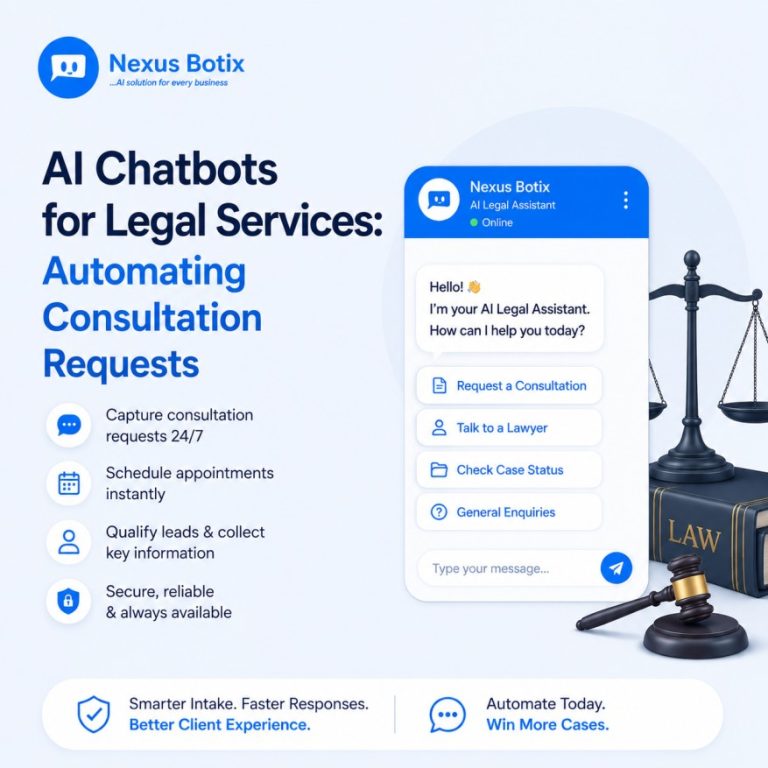
In real estate, they pre-qualify buyers and schedule property viewings automatically.
In banking, they handle account inquiries and fraud-related queries.
In education, they assist with admissions, onboarding, and student support.
The common outcome across all industries is the same:
reduced workload + increased efficiency + higher conversion rates
The next evolution is already emerging.
According to Gartner, conversational AI is moving toward deeper integration with enterprise systems, enabling automation beyond simple conversations.
Future AI systems will:
This means chatbots will no longer just respond to users, they will actively participate in business operations.
Platforms like Nexus Botix are already aligning with this direction by enabling workflow automation alongside conversational intelligence.
AI chatbots are no longer optional enhancements. They are becoming foundational infrastructure for modern businesses.
They directly impact:
But the real transformation is deeper than automation.
It is about changing how businesses communicate, sell, and scale.
Companies that adopt AI chatbot systems today are not just improving customer service—they are building the foundation for future digital operations.
If you want to transform customer interactions into real business growth, start building intelligent AI chatbot systems with Nexus Botix and turn every conversation into measurable revenue impact.