Physical Address
304 North Cardinal St.
Dorchester Center, MA 02124
Physical Address
304 North Cardinal St.
Dorchester Center, MA 02124
As businesses increasingly adopt artificial intelligence to improve efficiency and customer engagement, choosing the right automation platform has become an important strategic decision. Companies today want tools that can help them respond faster to customers, reduce repetitive work, and scale operations without dramatically increasing staffing costs.
Two platforms that often come up when discussing AI-powered customer communication are Nexus Botix and Tidio.
While both platforms aim to help businesses automate conversations and improve customer support, they are designed with very different philosophies. Tidio is primarily a live chat and chatbot platform focused on website communication, while Nexus Botix is built around the concept of AI-powered digital employees that learn directly from your business knowledge.
Understanding these differences is important for businesses that want to invest in automation that aligns with their long-term growth strategy.
Nexus Botix is designed to function as an AI digital employee for businesses. Instead of relying on predefined chatbot scripts, Nexus Botix learns directly from a company’s existing knowledge and documentation.
Businesses can train Nexus Botix using:
Once trained, Nexus Botix can answer customer questions, retrieve business information, and automate communication across digital channels.
This approach allows Nexus Botix to function more like an intelligent business assistant rather than a traditional chatbot. Because the system understands the company’s content, it can respond to a wide variety of customer questions without requiring businesses to manually design conversation flows.
For organizations that rely heavily on documentation or structured knowledge, Nexus Botix provides a powerful way to transform that information into an interactive AI system.
Tidio is widely known as a live chat and chatbot platform used by many small and medium-sized businesses. It allows companies to add chat widgets to their websites and communicate with visitors in real time.
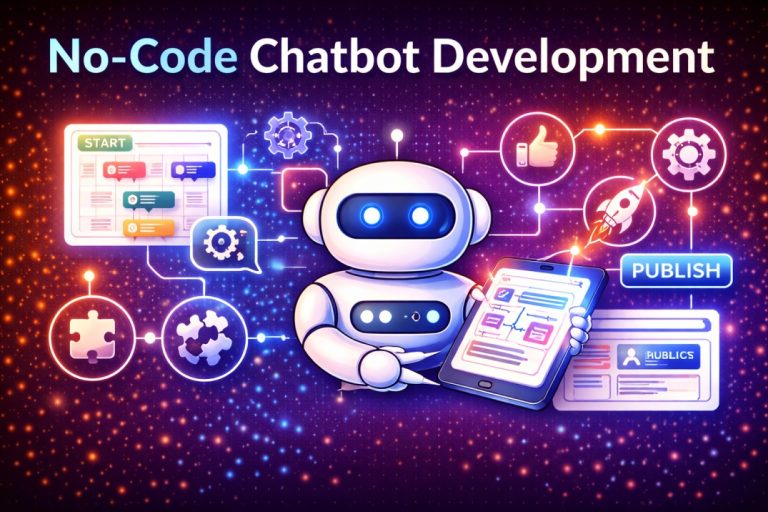
Tidio also offers chatbot automation through a visual workflow builder. Businesses can create chatbot scripts that guide customers through specific interactions such as answering common questions, capturing leads, or directing users to relevant pages.
This system works by defining pre-structured conversation paths. For example, when a customer asks a question, the chatbot follows a predefined script that directs the conversation toward specific outcomes.
While this approach works well for structured interactions, it can become limited when customers ask questions that fall outside the scripted workflow.
Although both platforms offer automation capabilities, the technologies behind them are fundamentally different.
| Feature | Nexus Botix | Tidio |
|---|---|---|
| Platform Type | AI automation platform | Live chat and chatbot platform |
| Core Function | AI digital employees trained on business knowledge | Customer chat and support automation |
| Knowledge Training | Learns from documents, links, and PDFs | Manual chatbot workflows |
| Flexibility | Can answer a wide range of questions based on training | Works best with structured questions |
| Automation Capability | Business knowledge automation and communication | Chat automation and live customer support |
The key distinction is that Nexus Botix focuses on knowledge-driven AI automation, while Tidio focuses on conversational chat workflows.
Businesses that handle large volumes of information often require automation tools that can understand and retrieve knowledge quickly.
Because Nexus Botix learns directly from business documents and content, it can function as a centralized knowledge assistant. When customers ask questions, Nexus Botix retrieves answers from the information it has been trained on.
This approach eliminates the need to constantly design chatbot conversation flows.
Instead of manually scripting interactions, businesses simply provide the information, and Nexus Botix uses that knowledge to generate intelligent responses.
For companies that manage complex information such as service providers, SaaS companies, consulting firms, or educational platforms this type of automation can significantly improve efficiency.
For businesses that primarily want to add a live chat feature to their website, Tidio can be a useful solution.
Tidio works well for tasks such as:
Companies that want simple chat automation combined with human support may find Tidio’s interface and workflow builder sufficient for these needs.
However, as businesses grow and customer inquiries become more complex, maintaining large chatbot workflows can require significant effort.
The comparison between Nexus Botix and Tidio reflects a broader shift in the automation landscape.
Traditional chatbot systems were designed around structured workflows and predefined scripts. While effective for basic tasks, they often struggle when customers ask complex or unexpected questions.
AI-powered platforms like Nexus Botix represent the next stage of automation.
Instead of relying on rigid scripts, Nexus Botix uses trained knowledge to generate answers dynamically. This allows the system to support a much wider range of customer inquiries and business use cases.
As AI technology continues to evolve, more organizations are adopting systems that function as intelligent assistants capable of supporting both customers and internal teams.
Both Nexus Botix and Tidio provide valuable tools for improving customer communication and operational efficiency.
Tidio is best suited for businesses that want to implement live chat and structured chatbot workflows for their websites.
Nexus Botix, however, is designed for organizations seeking a more advanced form of automation, one where AI systems function as digital employees trained on real business knowledge.
For companies looking to move beyond traditional chatbots and toward intelligent automation, Nexus Botix offers a powerful solution that can transform how businesses interact with customers and manage information.
Start automating your business today